Climate Changes: Causes, Effects, and Solutions
Climate change impacts nature, wildlife, agriculture, water resources, and human survival for future generations. It affects the whole environment.
Climate Changes: Causes, Effects, and Solutions
Climate change happens when there are natural disasters or man made disaster changes. Some of these changes can be natural, like the sun's activity and large volcanic eruptions. More than that, human causes are also there, like industrial buildings and transportation, and these also cause extreme heat in the environment. Extreme temperature-rising changes happening in ecosystems are signs of climate change. Climate changes that change the environment and living things.
Reason for climate change:
Climate change caused by human activities leads to greenhouse gases, causing the planet to heat.
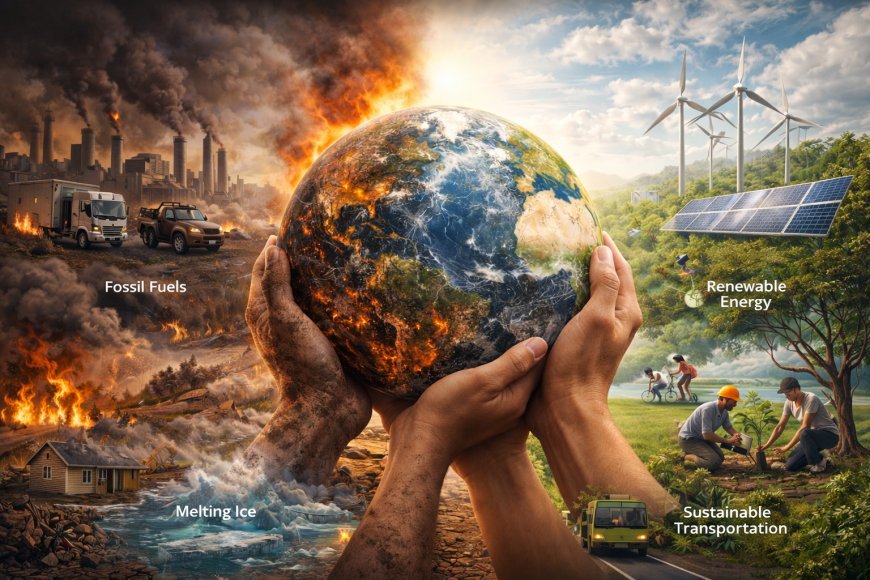
1. Fossil fuels: the greatest emissions come from the use of coal, oil, and gas for electricity and various other needs.
2. Industrial Works: Manufacturing, construction, and mining are human needs that release gases like carbon dioxide.
3. Waste Management: Methane and greenhouse gases produce wastewater treatment contribute to climate change.
4. Tree cutting: Tree cutting leads to climate change. Tree cutting reduces the planet’s ability to clean carbon out of the atmosphere.
5. Usage of Transportation: Fossil fuel trucks, ships, and cars emit greenhouse gases.
Effects:
These are effects that change the climate. Natural disasters like ice in Iceland melting, storms, and forest fires are happening more often, sea levels are rising, and biodiversity is being lost. These developments have an impact on living life.
1. Change in temperature and weather: Temperature will be rising in frequent and intense heat waves. causes of natural disasters like heat waves, air pollution, heavy rainfalls, and more.
2. Increasing sea level and ice melt: The melting of ice in Iceland will increase the sea level. This will lead to flooding and erosion.
3. Forest Fires: A temperature rise will cause forest fires that affect the wildlife and animals. Extreme heat waves may increase.
4. Species disappearing: Many plants and animals are struggling to adapt to climate change.
5. Human health risks: extreme heat causes dehydration and leads to skin issues. While the water level increases, the number of mosquitoes also increases.
Fixing climate change:
To reduce global warming, we need to reduce greenhouse gas emissions, increase energy efficiency, protect forests, and transition to plant-based diets.
1. Sustainable: For traveling, use public transport, walking, and cycling so that you can avoid pollution.
2. Restore Forests: Support reforestation, plant more native species plants and trees, and protect green spaces and forests.
3. Improve energy efficiency: The use of solar lights and LED lights helps a lot. Turn off the light and electronics. when not in use, so that you can reduce electricity consumption.
4. Sustainable diets: Reduce consumption of meat further.
Conclusion:
Climate change is one of the serious topics nowadays. When it comes to people's lives, climate changes are affecting the environment and life. To reduce these natural changes, we want to adapt to the climate. Reducing pollution and making environmentally friendly choices will make a better future.