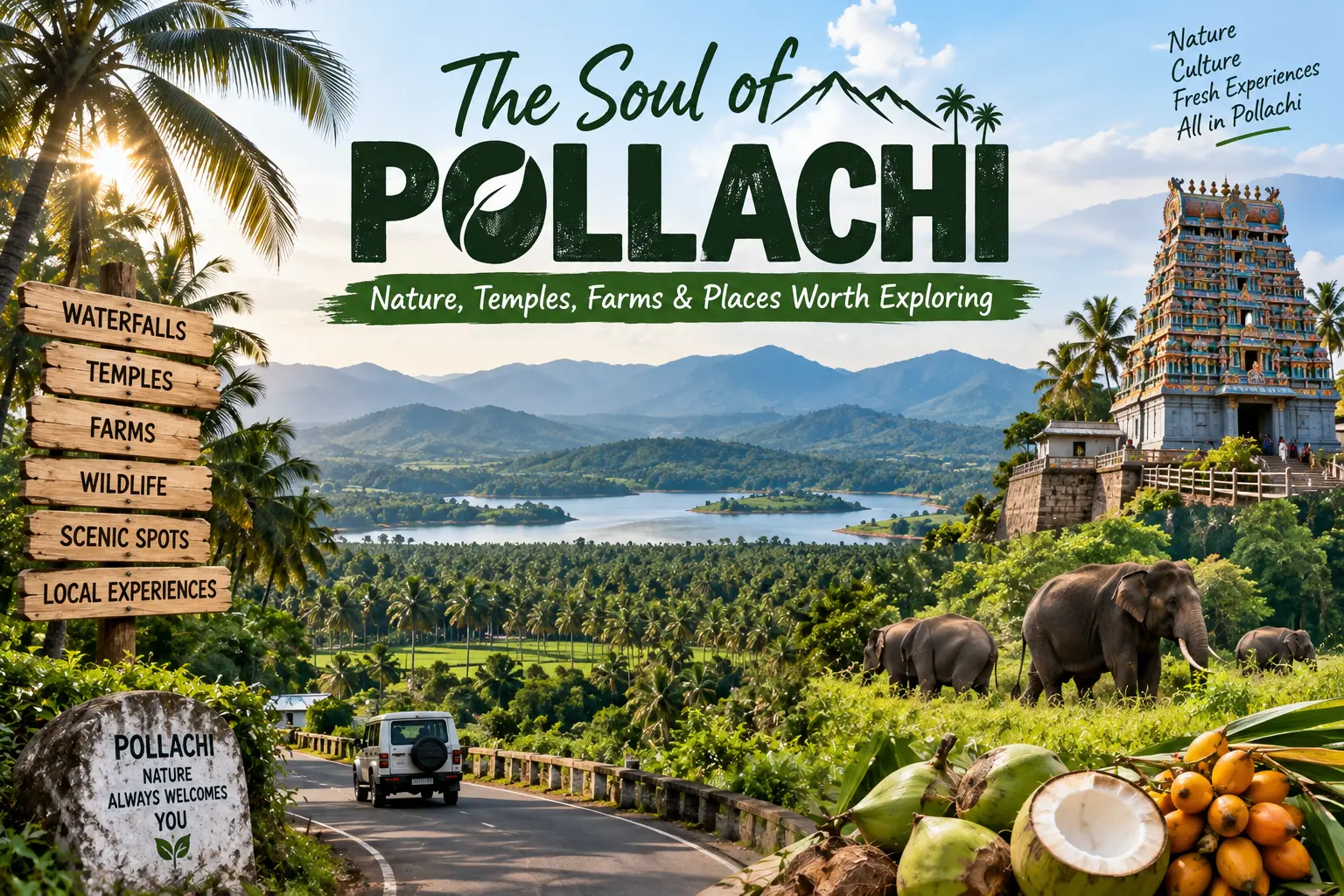
The Soul of Pollachi: Nature, Temples, Farms & Places Worth Exploring
Just 40 km south of Coimbatore, where the plains give way to the Anamalai Hills, sits a town that feels like a different world entirely. Pollachi is known as Tamil Nadu's "coconut capital" — a place of swaying palm groves, centuries-old temples, and roads that lead straight into the Western Ghats. It's also home to Asia's largest jaggery market and one of South Asia's largest cattle markets, giving it a rustic, working charm that few tourist towns retain. Here's everything worth seeing when you visit — and how it connects to the wider taluks of Coimbatore district, of which Pollachi is one.

Image: Coconut grove, Tamil Nadu (CC-BY-SA 4.0, via Wikimedia Commons)
Why Pollachi Is Called the "Coconut Capital"
Pollachi's economy has long revolved around agriculture — coconut, jaggery, and textiles in particular. The town's fertile land, fed by the Aliyar and Amaravathi rivers and cooled by the nearby Western Ghats, makes it one of the most productive coconut-growing regions in South India. Coconut and tender-coconut are exported from here across the country, and a drive through the outskirts reveals mile after mile of palm groves interspersed with banana and sugarcane fields.
The town's famous jaggery market — reputed to be the largest in Asia — and its cattle market, one of the largest in South Asia, are worth a visit if you want to see the agricultural heartbeat of the region up close, especially in the early morning hours when trading is at its liveliest.
Santhosh Organic Farm
At the foot of the Anaimalai Hills, this 50-acre farm has practiced natural farming since 1997, growing coconut, teak, lemon, areca nut, casuarina, rosewood, amla, and several other native species. It's a good stop if you want a hands-on look at sustainable farming practices rather than just driving past plantations.
Temples of Pollachi
Arulmigu Subramanya Swamy Temple
Right in the heart of Pollachi town stands one of the region's most historic shrines. Originally built by the Konga Cholas nearly 700 years ago as the Thiruvahatheswaramudayar Temple dedicated to Lord Shiva, it later became known as the Subramanyar Kovil, with Lord Subramanya (Murugan) as its presiding deity today. The temple's architecture reflects centuries of South Indian temple-building tradition and remains an active center of worship. For context on other historic shrines in the region, see our guide to temples and spiritual places in Coimbatore.
Masani Amman Temple, Anaimalai
About 15 km from Pollachi, in Anaimalai, stands the Masani Amman Temple — one of the most distinctive shrines in the region. The goddess is worshipped in a reclining posture and is believed to grant justice to those who have been wronged, drawing devotees from across the district. For temple history, timings, and a full visitor guide, see our Masani Amman Temple, Anaimalai guide.
Nature & Wildlife Around Pollachi
Topslip & the Anamalai Tiger Reserve
Pollachi serves as the gateway to Topslip, the main tourist hub of the Anamalai Tiger Reserve (formerly the Indira Gandhi Wildlife Sanctuary and National Park). Sitting at around 800 ft elevation on the Anamalai range, within the Nilgiri Biosphere Reserve and separated from the Nilgiri Hills by the Palghat Gap, the reserve spans nearly 1,480 sq km and is home to tigers, elephants, leopards, sloth bears, wild boar, and barking deer, along with dense teak and bamboo forests. Karian Shola alone is home to nearly 250 recorded bird species. All visitors need a permit from the Wildlife Warden's office in Pollachi, and van or elephant safaris can be arranged on-site. The sanctuary also gives access onward to Grass Hills and Manjampatti Valley, some of which require prior forest department authorization. Read our full Anamalai Tiger Reserve wildlife and forest guide before you go, and check the best trekking spots near Coimbatore for route ideas.

Image: Wild boar in the Anamalai hills (CC-BY-SA 3.0, via Wikimedia Commons)
Aliyar Dam & Monkey Falls
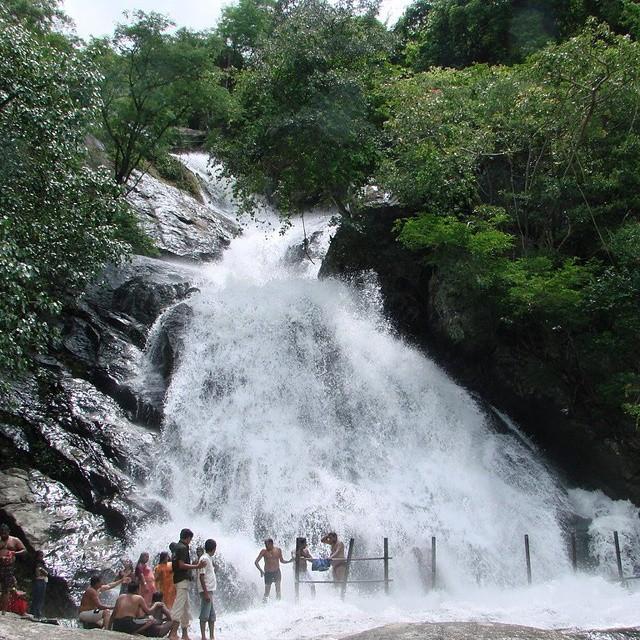
Aliyar Dam sits at the foothills of Valparai, just outside Pollachi, and is one of the most popular short getaways in the region — a reservoir ringed by the Anamalai hills, with an adjoining park, a fish farm, and canal views that make it ideal for a picnic or a quiet morning walk. About 6 km further along the Pollachi-Valparai road (roughly 29 km from Pollachi, at the 29th km marker), Monkey Falls — locally also known as Kavi Aruvi or Azhiyar Falls — drops around 60 ft into a forest pool. It's a popular roadside stop, though the falls run dry in poor-rainfall years and can flood dangerously during heavy monsoon, so it's worth checking current conditions before visiting. As the name suggests, keep an eye on your belongings around the resident monkeys. For more waterfall options across the district, browse the best waterfalls near Coimbatore.
Thirumoorthy Hills, Dam & Falls

About 50 km from Pollachi (and roughly 20 km from Udumalpet), Thirumoorthy Hills offer a quieter escape from the more crowded Valparai road. A perennial stream flows beside the Sri Amaralingeswarar Temple, Thirumoorthy Falls cascades nearby, and the Thirumoorthy Dam sits right next to the temple complex — a good half-day trip for those wanting fewer crowds and a mix of nature with temple visits in one stop.
Amaravathi Dam & Crocodile Farm
Built across the Amaravathi River near Amaravathinagar, a village in the foothills of the Anamalai Hills, this reservoir is fed by the Chinnar, Thennar, and Pambar rivers and has long supported a healthy wild crocodile population. Right beside it, the Amaravathi Sagar Crocodile Farm — established in 1976 and once considered the largest crocodile nursery in India — collects eggs from wild nests around the reservoir, hatches and rears the young in captivity, and periodically reintroduces them back into the wild. Currently around 98 crocodiles are maintained on-site, and the farm is open to the public daily from 9 a.m. to 6 p.m. for a modest entry fee. It's an offbeat, low-key stop that pairs conservation with a close-up look at one of the region's more unusual residents.
Parambikulam Tiger Reserve
Technically across the border in Kerala's Palakkad district, Parambikulam is a 643.66 sq km tiger reserve accessible almost exclusively via Pollachi — Thunakadavu, its headquarters, is about 48 km away. Lying in the Nelliampathy-Anamalai landscape of the Southern Western Ghats, it was declared a tiger reserve in 2009 and forms part of the Western Ghats UNESCO World Heritage Site. The reserve is home to four indigenous communities — the Kadar, Malasar, Muduvar, and Mala Malasar — many of whom now work as trekking and safari guides through the park's eco-tourism programs. It's best avoided during the monsoon months (June-August) but otherwise open year-round, drawing around 100,000 visitors annually.
Valparai
For travelers with more time, the hill town of Valparai — reached via the winding Pollachi-Valparai road through Aliyar, with somewhere between 40 and 42 hairpin bends depending on who's counting — is one of the most rewarding extensions of a Pollachi trip. Originally called Poonachimalai, Valparai's plantation history dates back to 1846, when coffee was first planted here; tea took over as the dominant crop once planters realized it suited the altitude and climate better. Today the town is surrounded by 56 sprawling tea and coffee estates, several of which offer factory tours and tastings. The Nallamudi View Point offers panoramic views toward Anamudi Peak, the highest point in South India, and the region is also known for sightings of elephants, gaur, and the endangered lion-tailed macaque. Plan your visit with our Valparai travel guide and learn more about the region's wildlife, elephants, and lion-tailed macaques. For the bigger geographical picture of the range Pollachi sits at the foot of, see our guide to the Western Ghats near Coimbatore and the Palakkad Gap that separates the Nilgiris from the Anamalais.
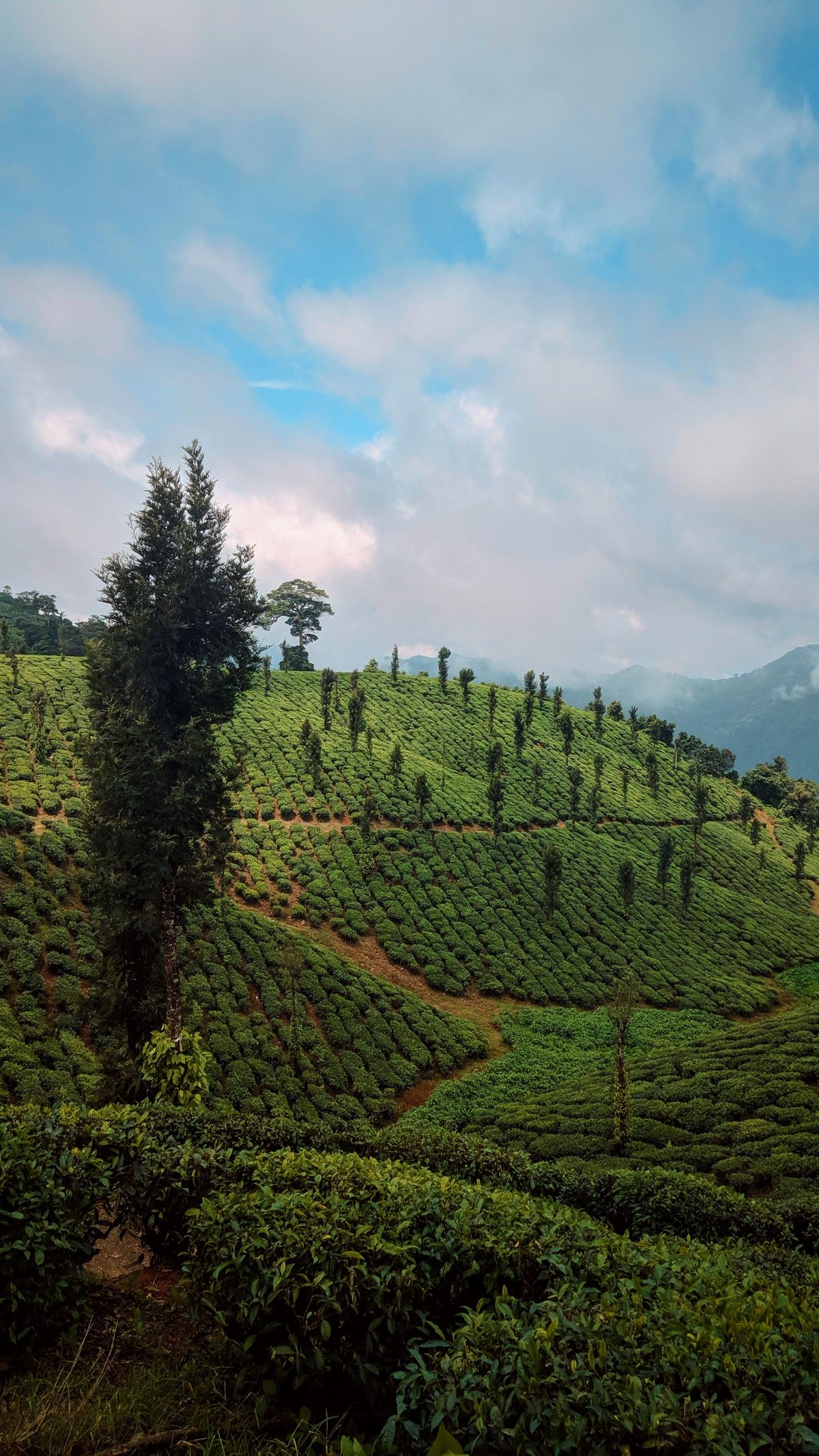
Image: Tea plantations in the Valparai hills (Pexels, free to use)

Image: View near Nirar Dam, Valparai, overlooking the Anamalai forest range (via Wikimedia Commons)
Movie Shooting Spots, Heritage Houses & Farms
Pollachi's palm-lined roads, rustic bridges, and colonial-era architecture have made it one of Tamil cinema's favorite filming backdrops for decades — many "village" scenes in Tamil films were shot on real farm roads around Pollachi rather than on a studio set. Topslip in particular is noted for its picturesque scenery and has hosted several movie sequences over the years, thanks to its dramatic mountain backdrop and dense forest cover.
Up in Valparai, the planter's bungalows built during the British colonial era add a different kind of character to the region. Structures like the Sinna Dorai Bungalow — a refurbished 1930s assistant manager's residence perched on the Iyerpadi hill in the Parlai estate — retain their period furniture and colonial-era decor, offering sweeping views over the tea plantations and the rainforests of the Anamalai hills. Several of these heritage bungalows have since been converted into stays for visitors, giving a genuine sense of the estate life that shaped this region.
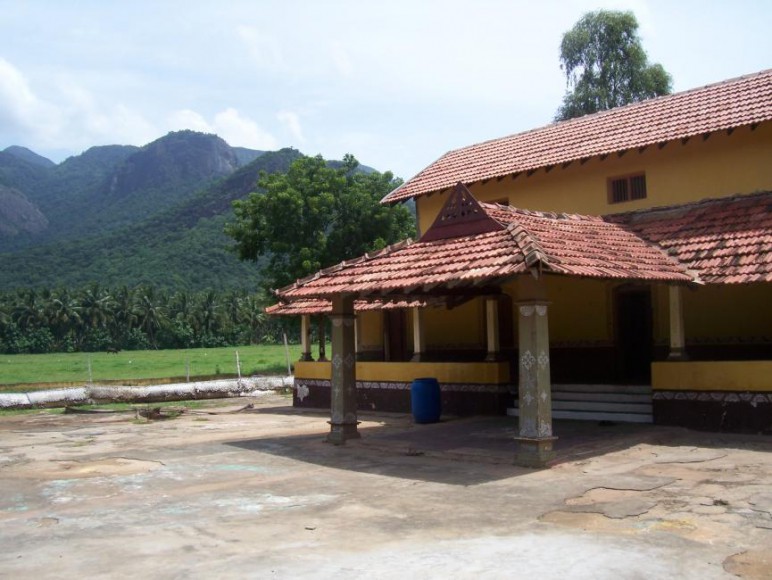
Back down in Pollachi itself, working coconut and organic farms (like Santhosh Organic Farm, mentioned above) continue the town's rural character, while the film connection and the farm-and-bungalow landscape together are a big part of why photographers and location scouts keep coming back.
Farms & Rural Experiences
- Coconut farms: Several farms around Pollachi welcome visitors for a closer look at coconut cultivation, from climbing demonstrations to fresh tender-coconut tastings.
- Jaggery market: Visit early morning to see traders and farmers in action at what's regarded as Asia's largest jaggery trading hub.
- Cattle market: One of South Asia's largest, offering a genuine (and unfiltered) glimpse into the region's rural economy.
- Organic farm visits: Santhosh Organic Farm and similar working farms near Anaimalai welcome curious travelers.
- Tea estate tours: Several Valparai estates offer factory visits and tastings for a hands-on look at how tea gets from bush to cup.
Local Food Worth Trying
Pollachi's food scene leans rustic and traditional — think banana chips, coconut-based curries, and jaggery sweets sold fresh from roadside stalls near the market. If you're continuing on to explore more of the region's food scene, check out Coimbatore's top street foods and the foodies' guide to Coimbatore restaurants for your return trip.
Where to Stay
Pollachi's proximity to the Western Ghats has made it a growing destination for nature resorts and eco-stays. A few options worth considering:
- Coco Lagoon by Great Mount — a nature-immersive resort setting
- Coconest Eco Village — a rustic, eco-conscious stay closer to the farmlands
- Ibex River Resort — riverside stay with easy access to the Anamalai foothills
Suggested Itinerary
One-Day Trip
Start early at the Subramanya Swamy Temple, drive to Aliyar Dam and Monkey Falls, stop at the Masani Amman Temple in Anaimalai on the way back, and end with a walk through the jaggery or cattle market if timing allows.
Two-Day Trip
Day one covers the temples, farms, and Amaravathi Crocodile Farm; day two heads up the Pollachi-Valparai road for tea estates and a stay overnight, or into Topslip for a wildlife-focused day. Pair this with a look at other weekend getaways from Coimbatore if you want to extend the trip further.
Planning Your Trip
Getting There
Pollachi doesn't have its own airport, so most visitors fly into Coimbatore International Airport and drive down (roughly an hour). The Pollachi railway station also connects to Palakkad Junction, making train travel a convenient option from Kerala — see our Coimbatore Railway Station guide for connections through the main junction.
Best Time to Visit
October to February offers the most pleasant weather for exploring farms, temples, and the foothills. Monsoon months bring dramatic waterfalls but also slippery trails and higher water levels at spots like Monkey Falls, so plan accordingly.
Frequently Asked Questions
How far is Pollachi from Coimbatore?
Pollachi is about 40 km south of Coimbatore, roughly an hour's drive.
What is Pollachi famous for?
Pollachi is known as Tamil Nadu's coconut capital, home to Asia's largest jaggery market, one of South Asia's largest cattle markets, and its role as a gateway to the Anamalai Tiger Reserve, Parambikulam, and Valparai. It's also a long-time favorite filming location for Tamil cinema.
Can I visit Topslip and Valparai in a single day trip from Pollachi?
Topslip is manageable as a half-day trip, but Valparai's distance and winding ghat roads make it better suited to an overnight stay if you want to explore properly.
Is Parambikulam Tiger Reserve part of Tamil Nadu or Kerala?
Parambikulam is in Kerala's Palakkad district, but it's accessible almost exclusively through Pollachi, making it a natural extension of a Tamil Nadu-based trip.
Is Amaravathi Crocodile Farm open to visitors?
Yes, it's open daily from 9 a.m. to 6 p.m. for a small entry fee, and remains an active breeding and conservation program alongside its role as a tourist stop.
Planning a longer trip through the region? Check out more travel guides, top tourist attractions in Coimbatore, family-friendly places to visit, and fun and adventure spots across the district. For upcoming events and festival dates in the region, see Coimbatore events and festivals and celebrations.